Jade, Quetzal Feathers and Cacao: the Three Treasures of Maya Art
When the Spanish arrived in Mesoamerica they were looking for gold. The Maya valued other things far more: a green stone, the feathers of a shy forest bird and the seeds of a tree. Jade, quetzal feathers and cacao run through almost every one of our Maya-inspired designs – here is why they mattered so much.
Jade: the stone of life
For the Maya, green jade (jadeite) was the most precious material on earth. Its colour linked it to water, to young maize and to the breath of life itself. Almost all Maya jadeite came from one region: the Motagua River valley in what is today Guatemala, which made it rare and valuable across the whole Maya world.
Rulers wore jade ear spools, collars, belts and headdress plaques as signs of power, and jade went with them to the grave. The most famous example is the jade mosaic mask found in 1952 in the tomb of K’inich Janaab’ Pakal, the great king of Palenque. Even ordinary people were sometimes buried with a small jade bead placed in the mouth, a symbol of the breath and soul.
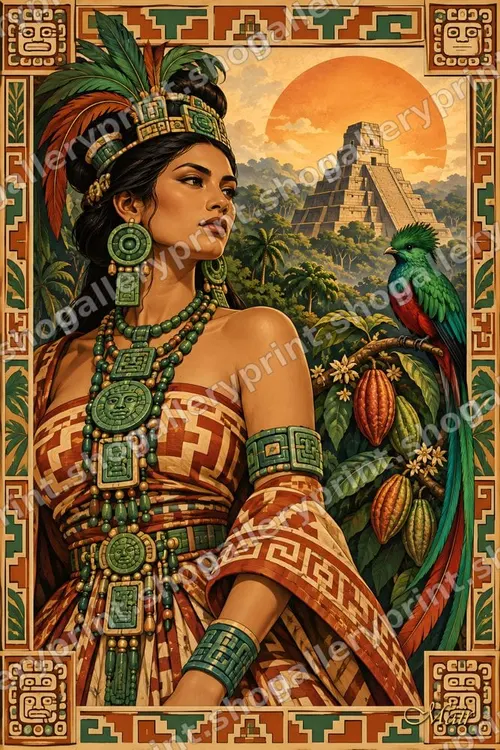
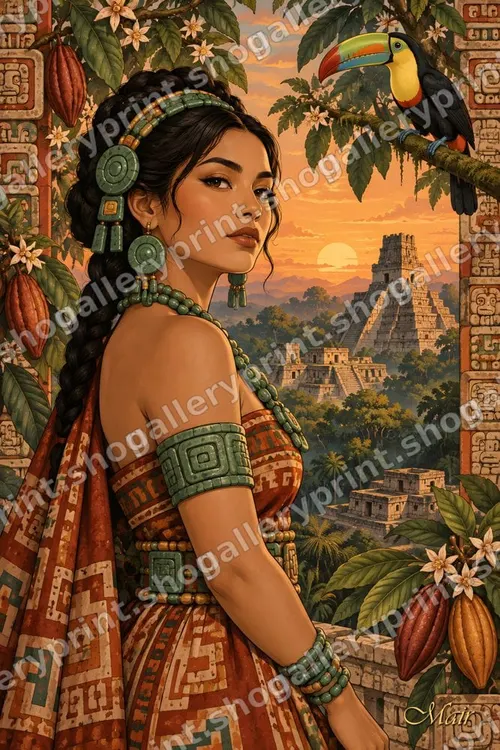
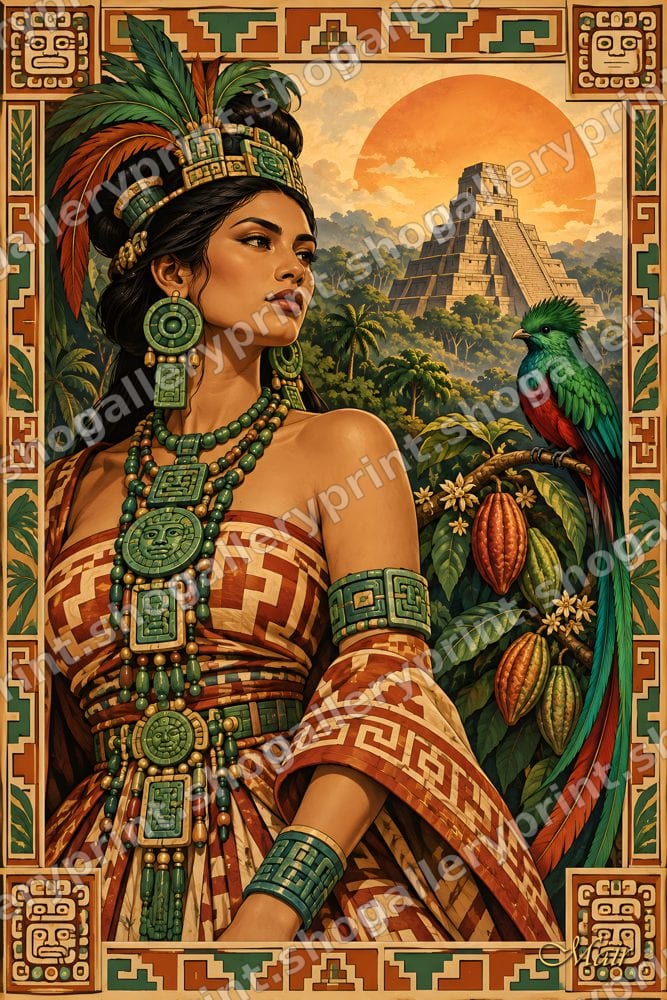
That is why the women and nobles in our paintings – like Maya Woman in Jade and Maya Noble in Jade Headdress – are hung with jade from head to chest.
Quetzal feathers: worn only by the powerful
The resplendent quetzal lives in the cloud forests of southern Mexico and Central America. The male grows emerald tail feathers that can be longer than his body. To the Maya and later the Aztecs these feathers were sacred and reserved for rulers, priests and the highest warriors, who wore them in towering headdresses.
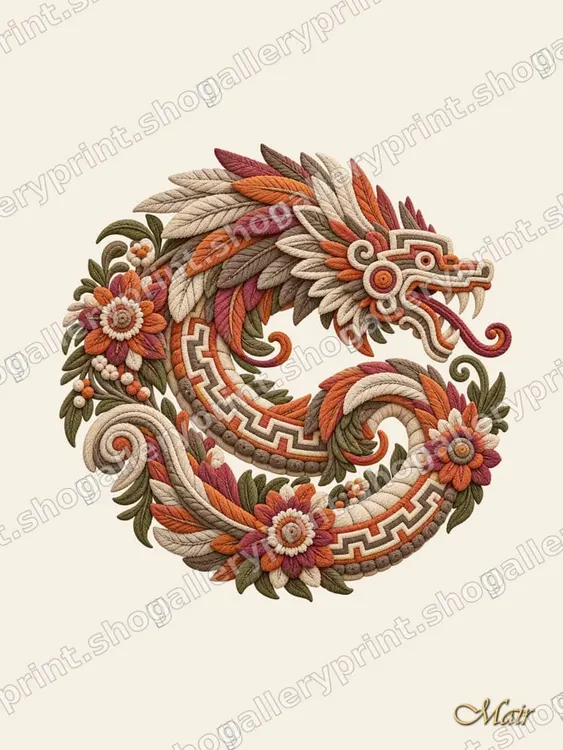
The bird itself was linked to the feathered serpent – Kukulkan to the Maya, Quetzalcoatl to the Aztecs – one of the great gods of Mesoamerica. It is often said that hunters caught quetzals, plucked the long feathers and released the birds so they could grow new ones. Today the quetzal is the national bird of Guatemala and gives its name to the country’s currency.
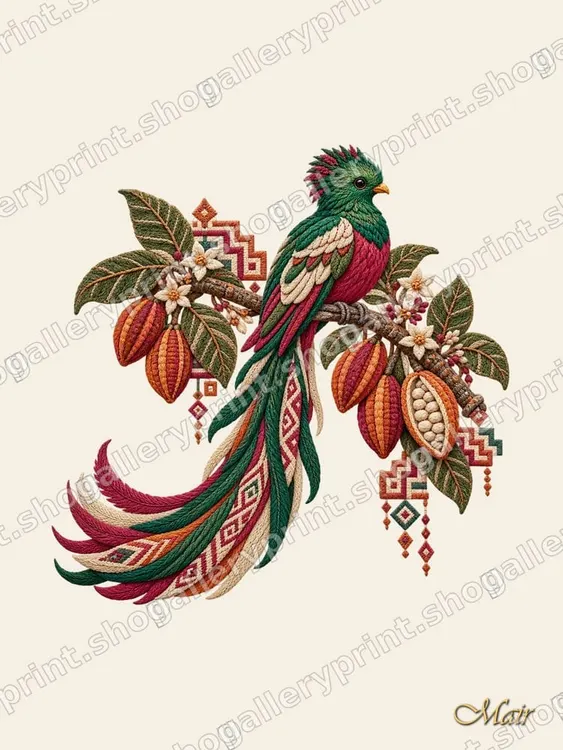
You can see it perched beside a noblewoman in Maya Woman with Quetzal & Pyramid, and on its own among cacao pods in Quetzal on a Cacao Branch.
Cacao: the drink of kings and the coin of the market
Long before chocolate bars, the Maya ground cacao seeds into a bitter, frothy drink, often spiced with chili, and served it at feasts, weddings and ceremonies. Archaeologists have found traces of cacao in Maya vessels more than 1,500 years old, some painted with the glyph for kakaw.
Cacao beans were valuable enough to be used as money in the markets of Mesoamerica, especially in Aztec times, and cacao appears again and again in Maya art and in stories of the gods. In our designs, ripe red and golden cacao pods frame the toucan, the quetzal and the jungle scenes as a quiet sign of abundance.
Maya art and Aztec art in your home
Whether you love ancient Maya art, Aztec art or Inca art, jade green, cacao red and gold are warm, earthy colours that sit well with wood, rattan, terracotta and plants. A single Maya portrait makes a strong focal point in a living room or hallway; a pair – a woman and a warrior in matching frames – works beautifully on either side of a sofa or a bed. For lighter rooms, our embroidered-style quetzal art and designs of the quetzal and the toucan on cream backgrounds are softer and suit kitchens and nurseries too.
Our Maya artwork and Aztec paintings are a set of imagined scenes and portraits, made with the help of AI tools and refined by us, out of love for the culture – not copies of real people or exact historic monuments. If you want to try one first, several are free as 8×10 printables.